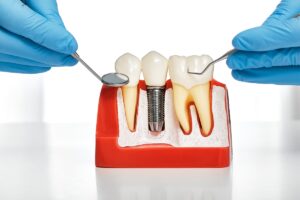
Dental implants are designed to last for decades, but certain complications can cause them to fail even after years of successful function. One of the most common causes is peri-implantitis – a bacterial infection that affects the gum and bone around the implant, leading to gradual bone loss and instability.
Other contributing factors include chronic grinding or clenching, which puts excessive pressure on the implant components, and systemic health conditions like uncontrolled diabetes or osteoporosis, which can interfere with bone support. Habits such as smoking and inadequate oral hygiene also increase the risk of delayed implant failure.
In this blog, we’ll cover what to look for, what causes implants to fail over time, how to prevent it, and what options are available if it happens to you.
Can Dental Implants Really Fail After Years?
Yes, they can. While most implants last 10 to 25 years or longer with proper care, some may develop issues even after several years of functioning normally.
Late implant failure usually happens when something disrupts the connection between the implant and the bone, or when the surrounding gum tissue becomes infected. Sometimes it’s related to bone loss, other times it’s due to how the bite comes together or changes in your overall health.
Unlike early implant failure (which usually shows up in the first few months), late failure tends to creep in slowly. That’s why keeping an eye on changes is so important.
Signs Your Dental Implant Might Be Failing Late
It’s not always obvious right away when something’s wrong with an implant. But here are some symptoms that could point to a problem:
- Pain or discomfort around the implant, especially if it’s new
- Swelling, redness, or bleeding at the gumline
- A loose or wobbly feeling when you bite or touch the implant
- Receding gums or the implant appearing longer than it used to
- Bad breath or a bad taste that won’t go away
- Trouble chewing or changes in your bite
Even if the discomfort is mild or comes and goes, don’t brush it off. These signs could mean the bone or gum tissue around the implant is being affected.
Common Causes of Late Dental Implant Failure
There are a few different reasons why implants can run into trouble years after they’re placed. The most common include:
Peri-implantitis
This is an infection in the gums and bone around the implant. It’s similar to gum disease and can lead to bone loss if it isn’t treated. Poor oral hygiene, smoking, and even leftover cement from a crown placement can contribute to this.
Bite issues or grinding (bruxism)
Too much pressure on an implant from grinding your teeth or an unbalanced bite can strain the bone and supporting tissues. Over time, this stress can loosen the implant or damage the bone it sits in.
Bone loss
Sometimes, changes in the jawbone due to aging, gum disease, or other health conditions can weaken the foundation around the implant.
Medical conditions or medications
Certain health issues like diabetes, osteoporosis, or autoimmune disorders can affect healing and bone health. Some medications may also impact how your body responds to the implant over time.
Smoking
Tobacco use restricts blood flow and impairs healing, which can compromise the health of the tissues around the implant and increase the risk of infection. The failure rate for implants is higher in smokers.
How to Prevent Dental Implant Failure
Implant issues are preventable with a few key habits. If you already have an implant or are considering one, here’s how to protect your investment:
- Brush twice a day and floss daily, even around the implant
- Use a soft toothbrush and avoid harsh scrubbing at the gumline
- Go for regular dental cleanings and checkups, usually every 6 months
- Let your dentist know if you notice any changes, even if they seem small
- If you grind your teeth, wear a custom nightguard
- Quit smoking or cut back as much as possible
- Keep chronic health conditions under control with your physician’s guidance
Regular maintenance goes a long way toward keeping your implant healthy for the long term.
What to Do if Your Implant Feels Off
Pain around a dental implant, a loose crown, gum swelling, or changes in your bite are not normal. These are signs that the implant or surrounding tissue may be compromised. Even if the symptoms are mild, they can point to an underlying issue like infection or bone loss.
We recommend:
- A deep cleaning around the implant to stop infection
- Adjustments to your crown or bite to reduce pressure
- Medications to treat infection or inflammation
- In more serious cases, surgical treatment to repair or replace the implant
Considering Dental Implants in St. Petersburg? Contact Us
If you’re thinking about getting implants for the first time or you’ve had one for years and are noticing changes, it’s important to work with a team that takes the time to evaluate your needs fully.
At Creating Smiles Dental, we provide implant evaluations, maintenance, and full dental implant placement, all under one roof here in St. Petersburg. If you have questions about an existing implant or want to explore your options, we’re here to help.
Contact us today to schedule a consultation. We’ll walk you through what to expect and help you move forward with confidence.