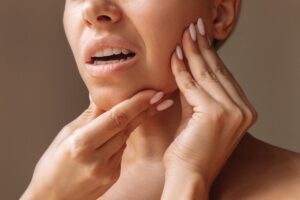
A click when you yawn or chew can be surprising. A painless sound from the temporomandibular joint is common and may not require treatment. However, jaw popping accompanied by pain, stiffness, locking, headaches, or limited movement may indicate a temporomandibular disorder (TMD).
At Creating Smiles Dental, Dr. N Brayer helps patients understand whether a joint sound is harmless or needs attention. If symptoms disrupt daily comfort, our St. Petersburg dentist can assess the joints, chewing muscles, teeth, and bite. The goal is to identify the source, ease strain, and protect comfortable movement.
What Causes a Jaw to Pop or Click?
The temporomandibular joints connect the lower jaw to the skull in front of each ear. A small cartilage disc helps each joint move smoothly. Sounds may occur when a disc shifts, when joint surfaces change position, or when surrounding muscles are overloaded.
Common causes include:
- Disc displacement: The disc may move out of position while the mouth is closed and return during opening, creating a click or pop.
- Teeth grinding or clenching: Bruxism can overwork the jaw muscles and increase pressure around the TMJ.
- Muscle tension: Stress, clenching, and poor resting jaw posture can contribute to soreness.
- Joint inflammation or arthritis: Changes within the joint may cause tenderness, stiffness, or a grinding sound, known as crepitus.
- Injury or overuse: A blow to the face, biting very hard foods, chewing gum, or opening the mouth unusually wide may irritate the joint.
Jaw popping alone does not confirm TMD. Diagnosis depends on associated symptoms and clinical findings.
When Does Clicking Need Professional Attention?
Arrange an evaluation if the noise becomes painful, persistent, or begins after an injury. Other warning signs include:
- Difficulty opening or closing the mouth
- A jaw that locks or catches
- Pain near the ear, temple, cheek, or neck
- Morning jaw fatigue or frequent headaches
- Discomfort while chewing
- Swelling or a noticeable change in the bite
Sudden facial weakness, trouble breathing, or severe swelling requires urgent medical attention.
How Is the Cause Diagnosed?
An evaluation reviews triggers, grinding, injuries, and pain patterns. The clinician may measure movement, feel the joints and muscles, and check for tooth wear.
Dr. N Brayer may consider whether tooth pain, infection, or another condition explains the discomfort. A dentist in St. Petersburg may recommend X-rays or CBCT when bone and joint details could affect care. MRI can show the disc and other soft tissues. Imaging is not needed for every click.
Which Treatment Options May Help?
Care usually begins with conservative, reversible measures because many TMD symptoms improve over time. Your plan should match the suspected cause and severity.
Reduce Strain at Home
For a short period, choose softer foods and smaller bites. Avoid gum, nail biting, and very wide yawning. Heat or cold may offer relief. Rest with the tongue on the palate and the teeth slightly apart.
Address Clenching and Grinding
Awareness and stress-management techniques may reduce daytime clenching. If nighttime bruxism or tooth wear is present, an oral appliance may be considered. A dentist should evaluate its fit and monitor symptoms.
Use Medication or Physical Therapy When Appropriate
A clinician may discuss short-term pain relief when medically appropriate. Physical therapy may address controlled movement, posture, stretching, and muscle relaxation. Never force a locked or painful joint.
If jaw popping continues with pain or restricted function, visit our dental office for an assessment. Persistent or complex cases may require coordinated care with a physician, physical therapist, or oral and maxillofacial specialist. Procedures that permanently alter the teeth, bite, or joints are generally not first-line options for routine TMD symptoms.
Move Toward More Comfortable Jaw Function
Do not ignore recurring pain, locking, or difficulty chewing. An examination can separate a harmless sound from a condition that may benefit from care. To speak with our dentist in St. Petersburg, book an appointment with Creating Smiles Dental. Our dental team can evaluate your symptoms and discuss appropriate next steps.
Frequently Asked Questions
1. Is a clicking jaw always a sign of TMD?
No. Painless clicking is common and may not need treatment. An evaluation becomes more important when the sound occurs with pain, locking, stiffness, or limited motion.
2. Can stress make jaw sounds worse?
Yes. Stress may increase clenching and muscle tension, placing more load on the joint. Relaxation habits and awareness of daytime clenching may help reduce strain.
3. Can teeth grinding cause jaw popping?
Grinding can fatigue the chewing muscles and increase joint pressure. Signs such as worn teeth, morning soreness, or headaches can help guide an evaluation.
4. Will a mouthguard stop the clicking?
An oral appliance may help some people, especially when clenching or grinding contributes to symptoms. It is not appropriate for every cause, and results should be monitored.
5. What foods should I avoid during a flare-up?
Temporarily avoid gum, hard candy, tough meats, and chewy foods. Softer meals and smaller bites can reduce workload while irritated tissues settle.
6. Can TMJ symptoms go away without surgery?
Many cases improve with conservative care, self-management, or physical therapy. Surgery is generally reserved for selected structural problems after less invasive approaches have not helped.